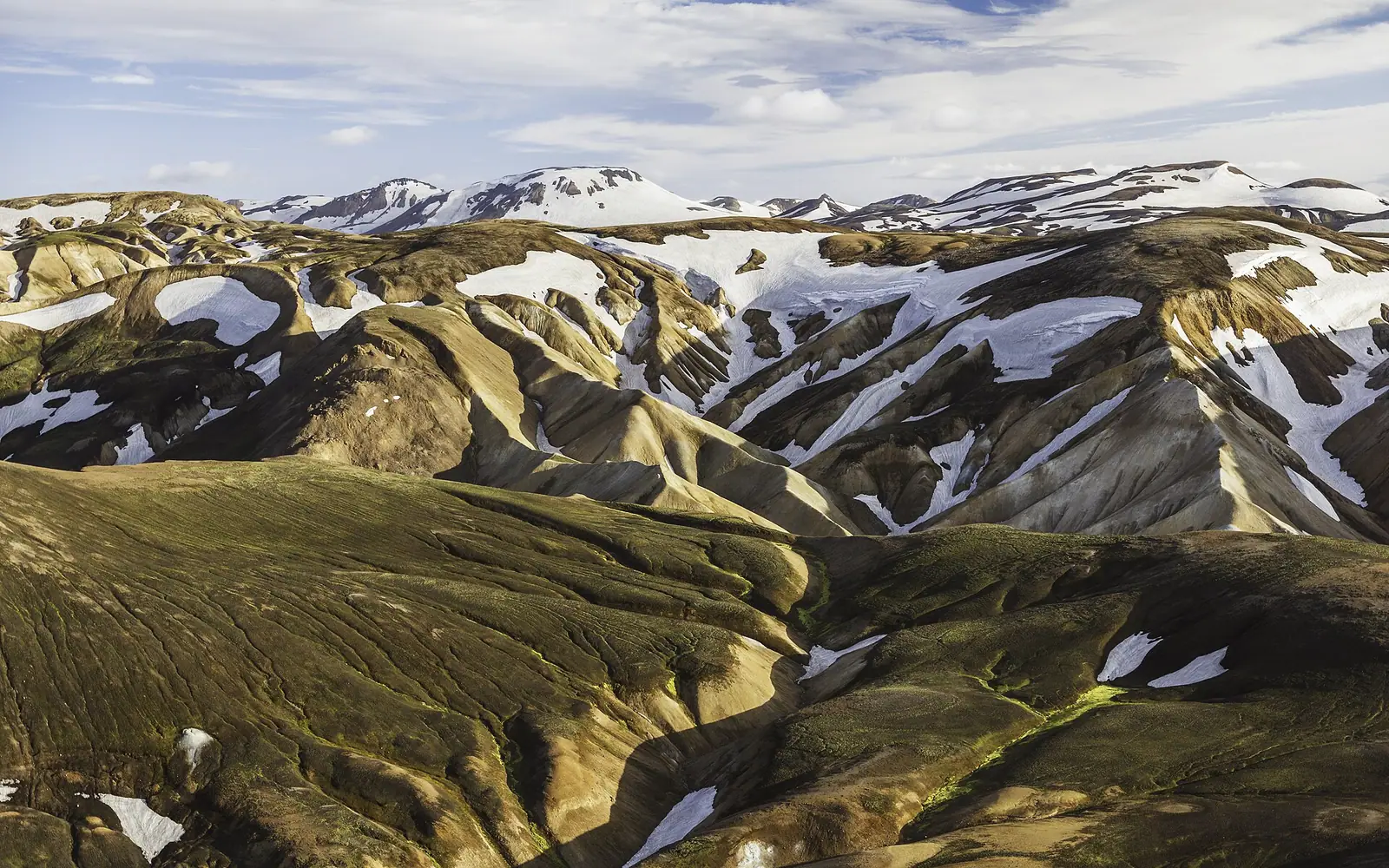
It rained for the first three days. Not heavily, but steadily, in the way that makes your jacket start to feel like a sandwich bag. I have walked the Laugavegur about 40 times, and I can say with authority that rain does not ruin it. It changes it, mostly for the better, in a way you only understand when you get to the end.
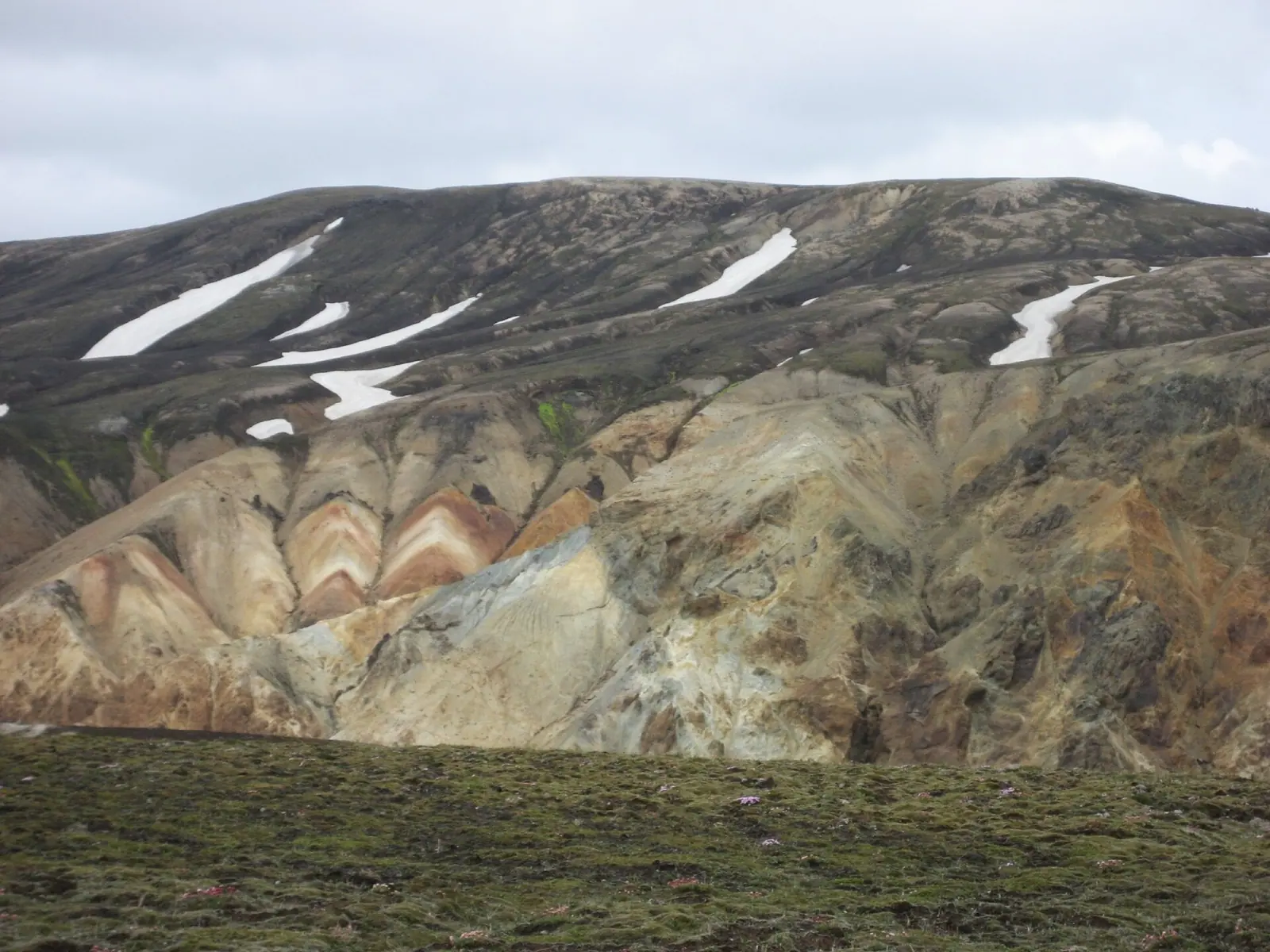
On the first morning we crossed the lava field at Laugahraun in cloud. You could see about 30 m, no more. The colour of the rhyolite slopes was muted, a series of ghostly oranges and yellows, and the steam from the vents hung low and merged with the cloud. One of our guests, a woman from Montréal, said it was like walking inside a watercolour. She was right.
The Bláfjallakvísl crossing was the issue. In a dry July it is a calf-deep wade across a gravel braid. After three days of rain it was thigh-deep and fast, and the water was the colour of milky tea. I stood on the bank and watched it for ten minutes, counting how quickly the stones moved. Then I called the truck, and we walked up to a narrower braid half a kilometre upstream.
We crossed in a line, with poles, facing upstream, in sandals. Katrín went first and I went last. Nobody fell. On the other side we stood in the rain, and someone started to sing. I do not know what it was. I think it was something from Montréal.
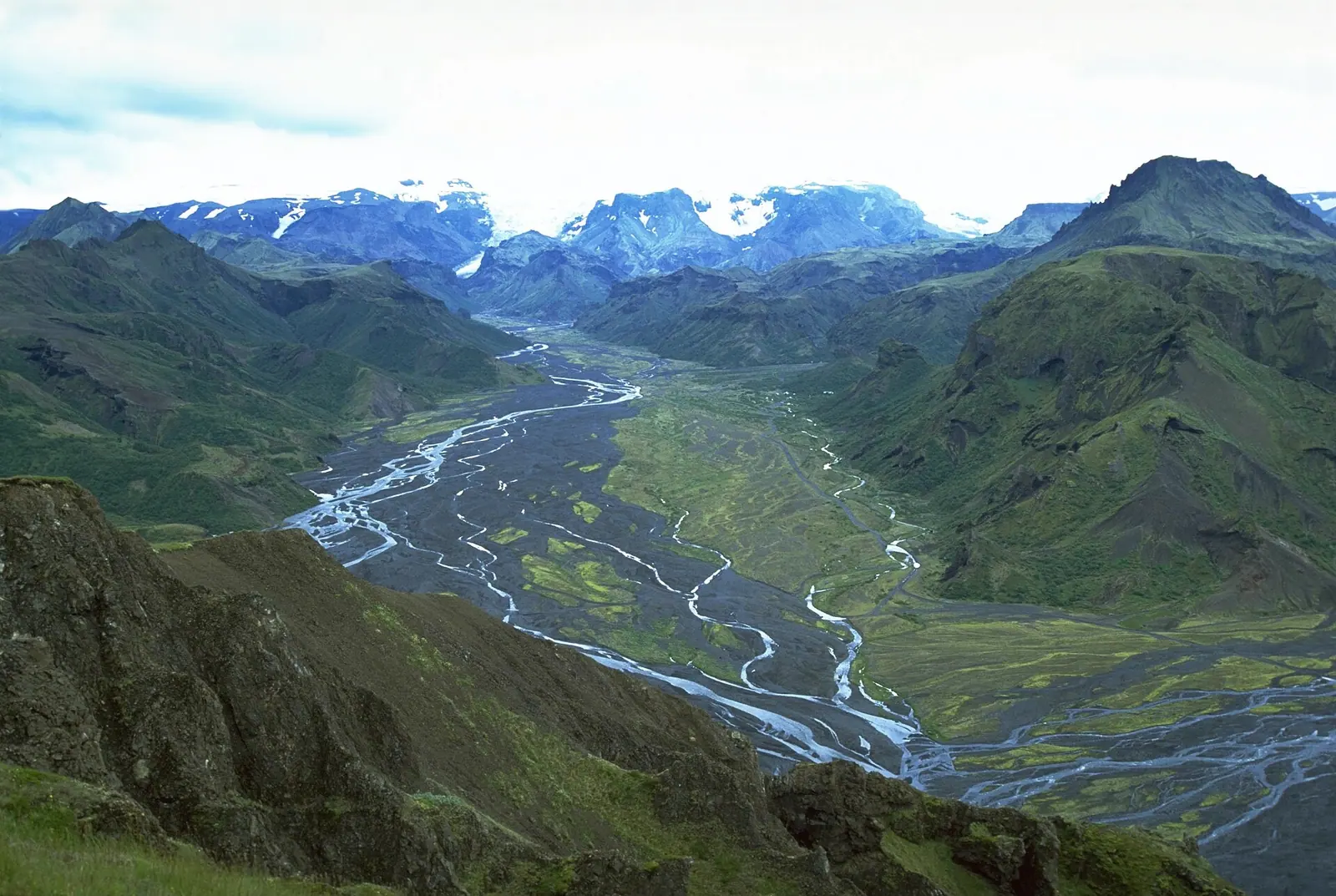
At Þórsmörk the sun came out. It is an old joke in Iceland that if you do not like the weather, you wait five minutes, but I have never seen it done so completely. By noon the valley was steaming, the glacier rivers were bright blue, and a guest was drying his socks on the roof of the hut. We stayed an extra hour at lunch.
On the last day we climbed to Fimmvörðuháls and crossed the snow with ropes. At the top, in a brief window, the clouds opened and there was Eyjafjallajökull on one side and Mýrdalsjökull on the other and the sea 1,000 m below, and then the cloud closed again. The group walked down the Skógá past twenty waterfalls without saying a word. I think it was the best day of the season.