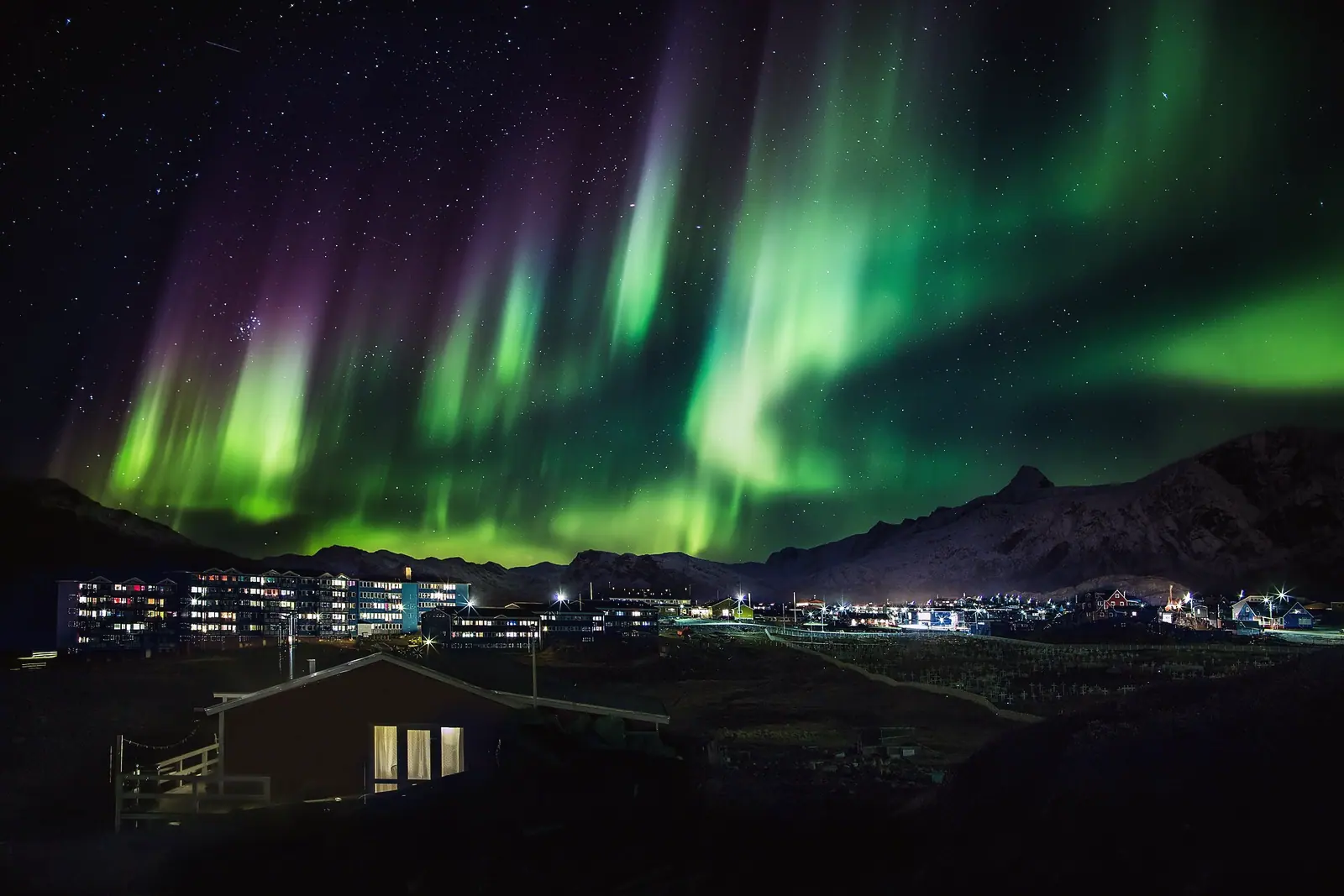
The first two nights of an Aurora Camp are always quiet. People are shy of their stoves, unsure of their sleeping bags. They sit outside in a row with their thermoses and say things like “it is not really cold”, which is a sentence the cold will answer later.
On the third night, in February, the activity index was a modest Kp 3 and there was a thin band of cloud in the south. I had told the group at supper that it would probably not be a big night, and that they should sleep. They did, or tried to. I went to bed in my clothes, with my boots by the door and the thermometer outside at -24 °C.
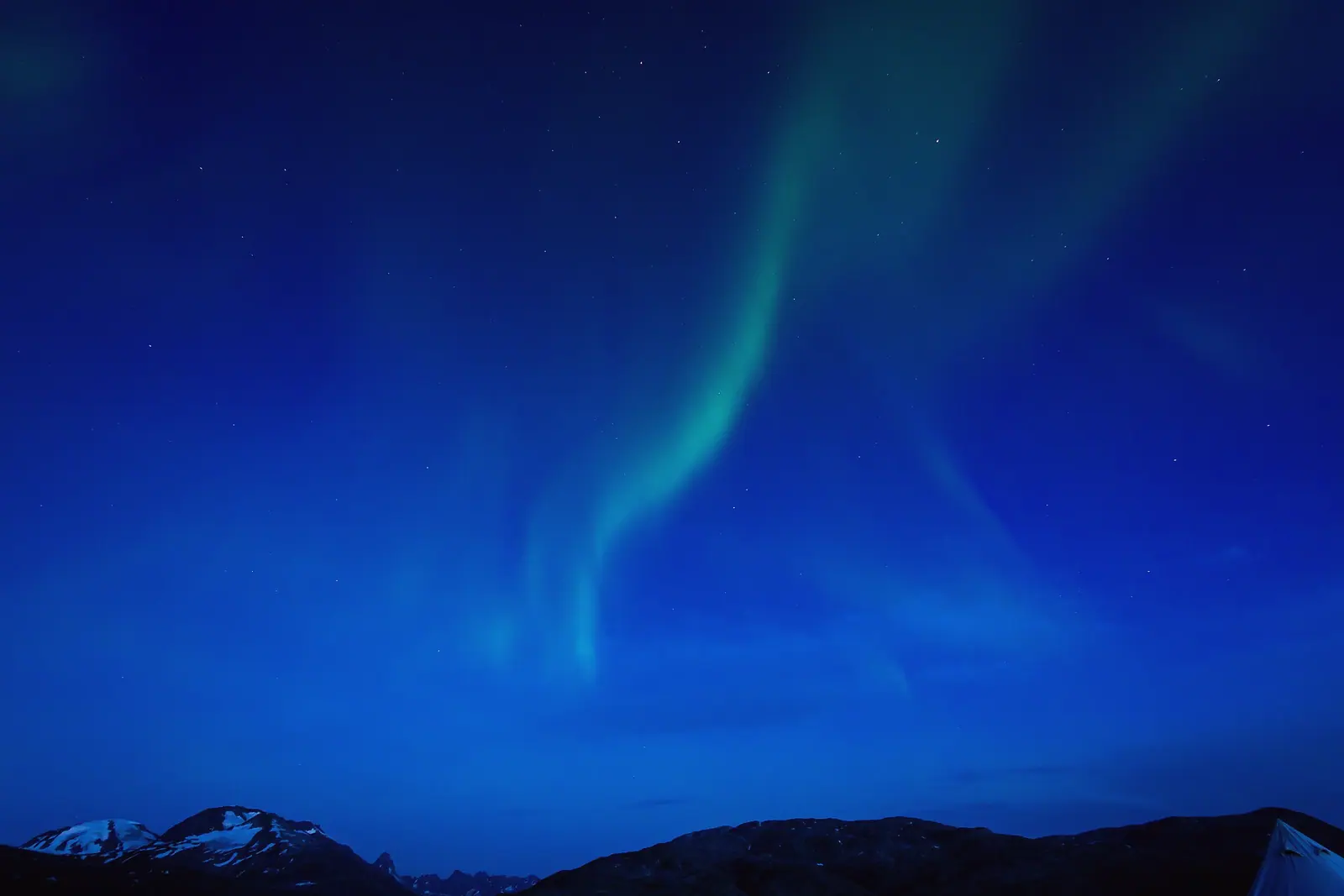
At ten past two I woke because the stove had stopped ticking. I went outside to feed it and the sky was moving. Not a faint glow in the south, but a curtain, green, folding over itself from the north to the south over the lake, with a fringe of pink at the lower edge. It was perfectly silent. The dogs were awake and not barking.
I went from tent to tent in my socks. You have to be gentle, because people wake up thinking something is wrong. “Come out,” I said, “it is here.” One by one, they came out in sleeping bags and parkas and stood on the ice with their mouths open. A woman from Chennai, in her first winter ever, stood for forty minutes without moving.
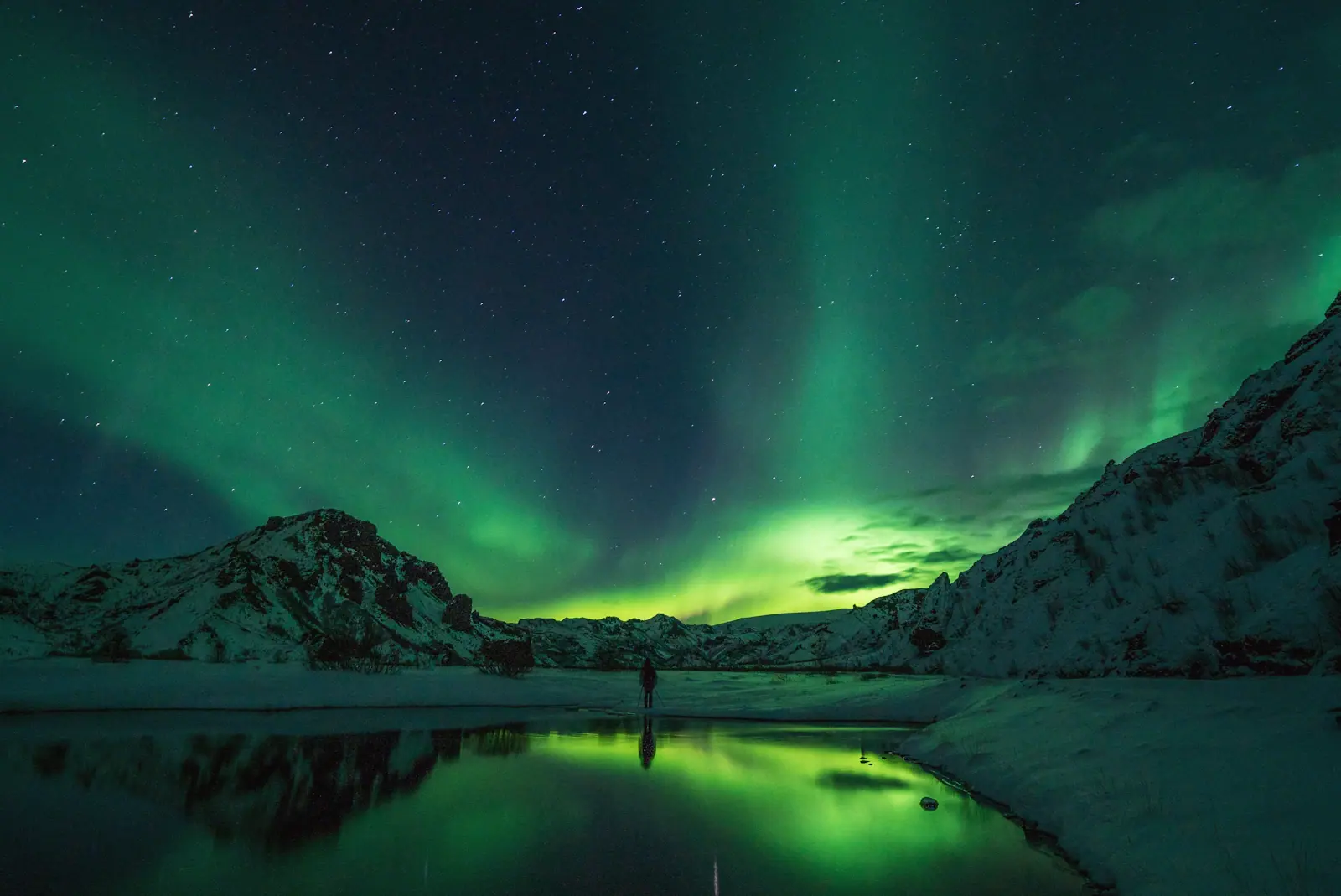
It lasted until about four. At the end it faded the way fires do, from the edges inward, down to a single pale arch over the ice sheet. Then it went out. Somebody laughed. Somebody else started to cry, and then laughed too. We went back to our tents and slept until noon.
I keep a notebook in which every night is logged: wind, cloud, Kp, temperature. On the page for that night I wrote only one line. “All woke. Nobody complained.”