Ground segment and compliance
A satellite is only useful if the data comes down on time and everyone is allowed to use it. This is how we handle both.
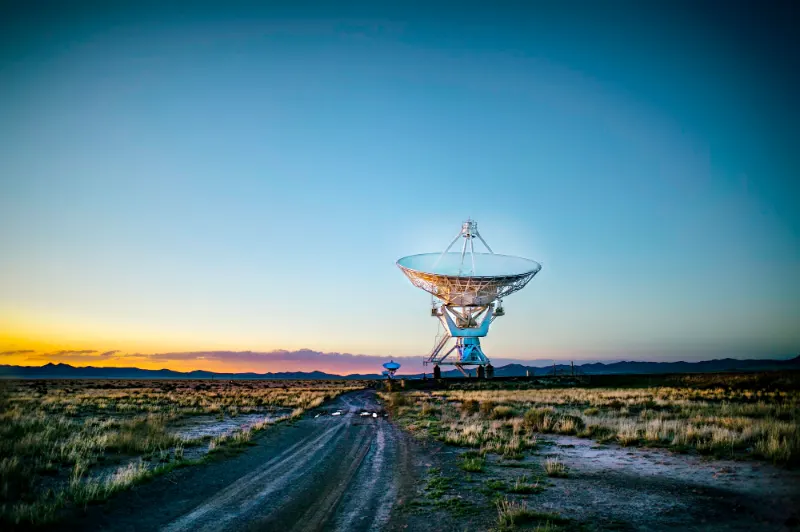
Downlink stations
Five stations place the satellite in contact with the ground about 55 times a day. Most passes are over the poles, where every orbit crosses the horizon.
| Station | Latitude | Operator | Antenna | Band | Passes per day |
|---|---|---|---|---|---|
| Svalbard | 78° N | Partner network | 13 m | X and S | 14 |
| Inuvik | 68° N | Partner network | 13 m | X and S | 12 |
| Kiruna | 68° N | Partner network | 13 m | X and S | 12 |
| Awarua | 46° S | Perihel Ground Operations | 11 m | X and S | 8 |
| Punta Arenas | 53° S | Partner network | 9 m | X and S | 9 |
Mission control is in Glasgow, with a second control room and ground operations in Wellington. Either can fly the whole fleet.
Licensing, security and export control
| Area | What we do |
|---|---|
| Spectrum licensing | Frequencies are filed with the ITU through the national regulator before launch: X-band downlink in the Earth exploration satellite band (8025 to 8400 MHz) and S-band telemetry and command. Filings are coordinated per satellite. |
| Operating licence | An orbital operator licence under the UK Space Industry Act 2018, held by Perihel Space Ltd, plus a licence in the country of launch and, where the law requires it, in your country. Our compliance team files all of them. |
| Data security | Payload data is encrypted on board and kept encrypted to your account. Command links use authenticated, encrypted channels. Operations are certified to ISO 27001, with an audit trail on every tasking request and an annual penetration test by an independent firm. |
| Export control | Sensors above 0.5 m, and radar above 1 m, are licensed per customer under the UK and EU dual-use regimes. We run end-user checks before a contract is signed and keep records of every licensed delivery. |
| Shutter control | On request, we can restrict imaging of specified areas or apply a licensing authority's shutter orders, with a written record. |
| Debris and end of life | Every satellite has propulsion and leaves orbit within five years of switch-off, well inside the 25-year guideline. Conjunction warnings come from the space surveillance networks and we manoeuvre when the risk is above 1 in 10,000. |
| Insurance | Launch and first-year in-orbit cover is included in the fee. Third-party liability cover is held at the level the licence requires. |
Certifications
| Standard | Scope | Status |
|---|---|---|
| ISO 27001 | Operations and data delivery | Certified, renewed April 2025 |
| ISO 9001 | Manufacturing and integration | Certified |
| ECSS-aligned processes | Spacecraft engineering and test | Audited by launch providers |
| Space Data Association | Conjunction data sharing | Member since 2021 |
Compliance questions
Most customers are cleared in two weeks. Sensitive end-uses or destinations can take up to three months, which we plan for in the six-month schedule.
Yes, under a national programme: a dedicated ground station on your territory, processing in your cloud region, and no copy leaves.
Only you and the operations engineers who handle them. Requests are logged and the log is yours to audit.
Failures in the first year are covered by the included insurance. We re-fly the mission from the backup launch seat and your fee does not run while there is no service.
Ask for the compliance pack
A 20-page summary of licences, certificates and security controls, under NDA.