How the service works
Five steps from a requirement to calibrated imagery in your cloud account. We handle everything between the two.
Specify
Weeks 0 to 2
You tell us what you need to see and how often. We turn that into an orbit, a sensor and a data path.
A mission engineer runs the numbers against the fleet plan and tells you in writing what the satellite can and cannot do. If your requirement is out of reach, this is where you hear about it, not at month four.
- You provide
- Area of interest, revisit target, preferred cloud, any security constraints
- We deliver
- Mission review document, orbit and downlink analysis, fixed monthly fee
Build
Months 1 to 3
Your payload is integrated on the Perihel standard bus, which has flown 41 times. Nothing new is designed.
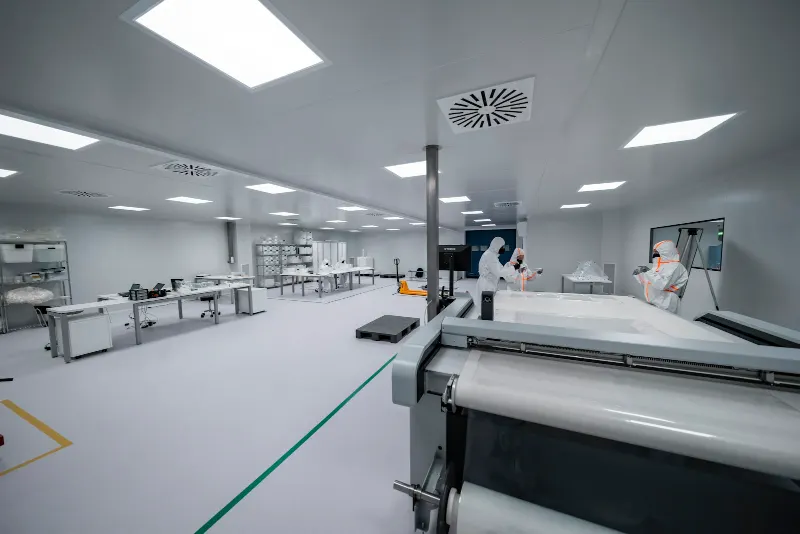
The bus, the on-board computer and the radio are carried over unchanged. Payload integration takes about eight weeks, followed by vibration, thermal vacuum and an end-to-end data test.
- You provide
- Sign-off at design review; optional own sensor (up to 12 kg, 60 W)
- We deliver
- Flight satellite, calibration report, integration photos
Launch
Months 4 to 5
Seats are booked on rideshare missions at signature, with a backup seat on a second vehicle.
Rideshare keeps the price low and the manifest flexible. Every contract carries a primary and a backup seat; if one slips, the satellite moves to the other without renegotiation.
- You provide
- Nothing, unless you want to attend the campaign
- We deliver
- Launch, early-orbit operations, first contact
Operate
From month 6
Two control rooms, in Glasgow and Wellington, fly the satellite and plan your tasking.
Tasking requests are checked against orbit, power and downlink, and confirmed or rescheduled within 30 minutes. Orbit and thermal health are ours; you never see a spacecraft alarm.
- You provide
- Tasking requests through the web console or API
- We deliver
- Orbit maintenance, health monitoring, a 99.5 percent monthly availability target
Deliver
Within 40 minutes of downlink
Calibrated products arrive in your cloud account or through the API, encrypted from satellite to bucket.
Processing is automatic and versioned. You can also reprocess an archive scene to a newer calibration at no charge.
- You provide
- A bucket or an API client
- We deliver
- L1B to L2 products, STAC metadata, delivery receipts
Six months from contract to first image
Work on the ground segment, licensing and launch booking runs in parallel with the build, so the critical path is integration and test.
- Mission reviewOrbit, payload and data path fixed, fee quoted
- Design reviewRequirements frozen, interfaces signed off
- Payload integrationYour payload on the flight-proven bus
- Licensing and ground set-upFrequency filings, station time, encryption keys
- Environmental testVibration, thermal vacuum, end-to-end
- Launch campaignShipment, fuelling, integration on the rocket
- CommissioningTwo weeks of calibration, first image to your bucket
Months from contract signature. The fee starts at first image.

Questions about the process
No, Perihel owns it. You hold exclusive tasking rights to your payload and every byte it collects. From year two you can buy the satellite out at a price fixed in the contract.
Yes. The standard bus accepts payloads up to 12 kg and 60 W. We check mechanical fit, power and data rate in the mission review.
Your fee starts at first image. A slip costs you time, never money, and every mission has a backup seat on a second vehicle.
You can renew, move to a newer payload on a fresh bus, or have us retire the satellite. Every Perihel satellite leaves orbit within five years of switch-off.
Start with a mission review
A first assessment is free and takes about a week.